

+918048127456

Currently it only shows your basic business info. Start adding relevant business details such as description, images and products or services to gain your customers attention by using Boost 360 android app / iOS App / web portal.

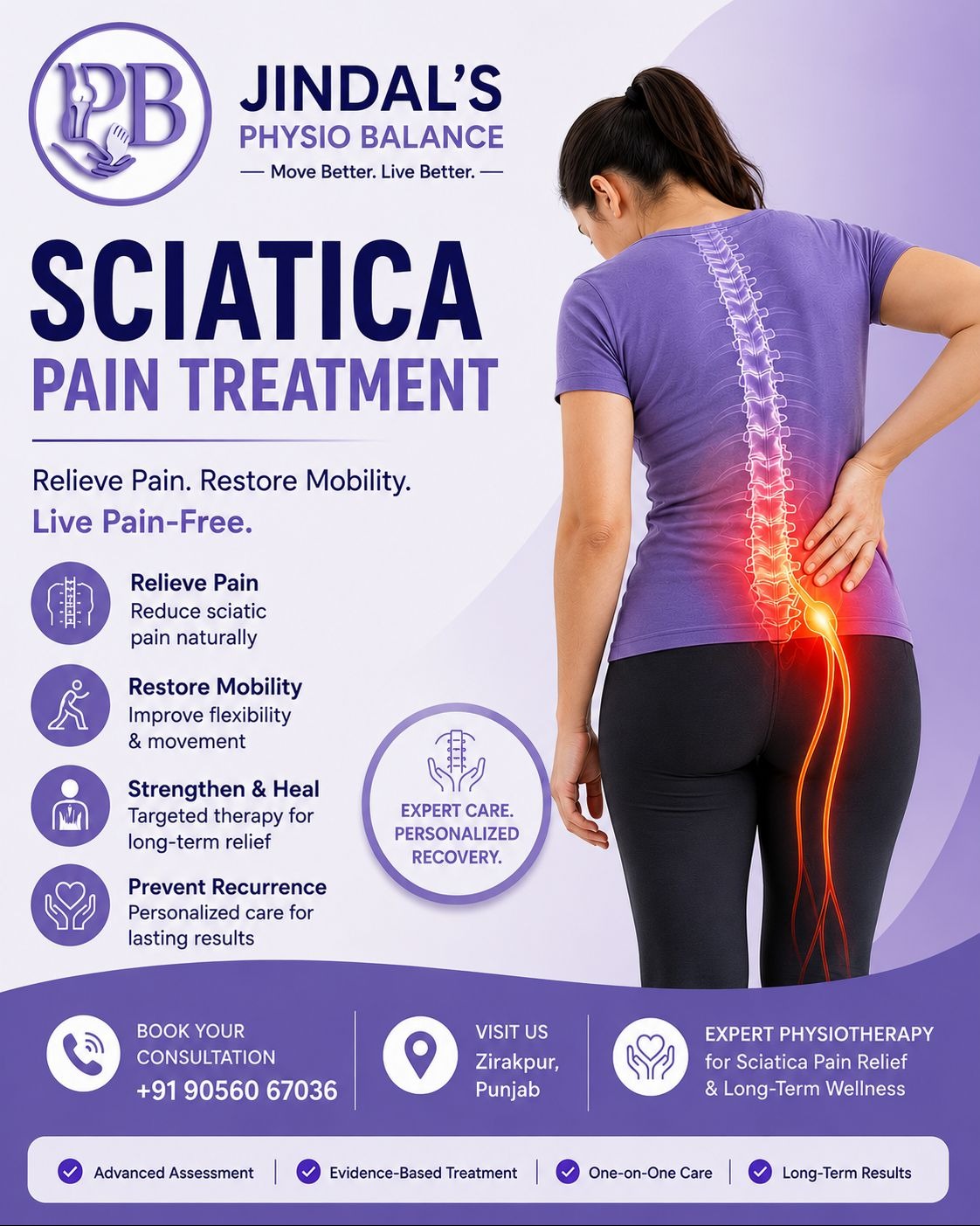
Are you experiencing a sharp pain that starts in your lower back and travels down your buttock into your leg? Do you feel tingling, numbness, or weakness while walking or sitting? These could be signs of sciatica. At Jindal's Physio Balance, we specialized in identifying the root cause of your pain and providing evidence-based physiotherapy treatment to help you recover naturally-without replying solely on painkillers or surgery. What is Sciatica? Sciatica is not a disease; it is a condition caused by irritation or compression of the sciatic nerve, the longest nerve in the human body. The pain usually affects one side of the body and can range from mild discomfort to severe, debilitating pain. --- Common Symptoms of Sciatica: - Pain radiating from the lower back to the buttock and leg - Burning or electric shock-like pain - Tingling or numbness in the leg or foot - Muscle weakness in the affected leg - Difficulty standing, walking, or sitting for long periods - Pain that worsens while coughing or sneezing --- What Causes Sciatica? Several conditions can compress or irritate the sciatic nerve, including: - Herniated (slipped) disc - Lumbar spinal stenosis - Piriformis syndrome - Degenerative disc disease - Spondylolisthesis - Poor posture and prolonged sitting - Muscle tightness and weakness - Pregnancy-related pressure on the sciatic nerve Identifying the exact cause is essential because treatment differs for every patient. --- Why Physiotherapy is the Best Treatment for Sciatica? Physiotherapy addresses the root cause of sciatica instead of simply masking pain. At Jindal's Physio Balance, your treatment plan may include: - Comprehensive posture and movement assessment - Pain-relieving manual therapy - Sciatic nerve mobilization techniques - Targeted stretching for tight muscles - Core strengthening and spinal stabilization exercises - Postural correction - Ergonomic advice for work and daily activities - Home exercise program to prevent recurrence Our goal is not just pain relief but long-term recovery and prevention. --- How Long Does Recovery Take? Recovery depends on the severity and cause of sciatica. - Mild cases may improve within 2–6 weeks. - Moderate cases often require 6–12 weeks of guided physiotherapy. - Chronic cases may need longer rehabilitation. Following the prescribed exercise program significantly improves recovery and reduces the chances of recurrence. --- When Should You See a Physiotherapist? Seek professional assessment if: - Pain lasts more than a few days. - Pain radiates below the knee. - You experience numbness or weakness. - Walking becomes difficult. - Pain keeps returning. - Daily activities are affected. Early intervention often leads to faster recovery. --- Tips to Prevent Sciatica - Maintain good posture while sitting and standing. - Exercise regularly. - Strengthen your core muscles. - Avoid lifting heavy objects incorrectly. - Take breaks if you sit for long hours. - Maintain a healthy body weight. --- Why Choose Jindal's Physio Balance? At Jindal's Physio Balance, every patient receives a personalized treatment plan based on detailed clinical assessment—not just symptom-based treatment. We focus on: - Accurate diagnosis - Evidence-based physiotherapy - One-on-one patient care - Long-term pain relief - Functional recovery and prevention --- Book Your Consultation Don't let sciatica affect your daily life. Book an assessment at Jindal's Physio Balance and begin your journey toward pain-free movement with personalized physiotherapy care


