Knee pain is one of the most common problems affecting adults, older people, athletes and even individuals who spend long hours sitting or standing. It can make simple activities such as walking, climbing stairs, squatting, getting up from a chair or exercising difficult.
But knee pain is not always caused by the same problem.
Some people develop knee pain after an injury, while others experience it gradually because of osteoarthritis, muscle weakness, reduced joint mobility, altered movement patterns or changes in physical activity.
This is why physiotherapy for knee pain should begin with a proper assessment rather than simply treating the painful area.
At Jindal’s Physio Balance, Zirakpur, our approach focuses on understanding the factors contributing to your knee problem and developing an individualized rehabilitation plan based on your condition, goals and functional limitations.
What causes knee pain?
Knee pain can have many different causes. Some common ones include:
1. Osteoarthritis
Knee osteoarthritis is more common with increasing age and can cause pain, stiffness and difficulty with activities such as walking, stairs and squatting.
Physiotherapy may focus on maintaining mobility, improving strength, increasing functional capacity and helping the person remain active safely.
2. Sports and exercise-related injuries
Sudden changes in activity, poor landing mechanics, repetitive loading or direct trauma can contribute to injuries involving structures such as the ligaments, meniscus or muscles around the knee.
Rehabilitation may be required after injuries such as ACL injuries, meniscus injuries or knee sprains.
3. Muscle weakness
Weakness of the quadriceps, hamstrings, gluteal muscles or calf muscles can affect how the lower limb handles load during walking, running, stairs and other activities.
A physiotherapist can assess strength and movement and determine which areas require targeted strengthening.
4. Previous injury or surgery
Even after an injury has healed or surgery has been completed, strength, mobility, balance and movement control may not have completely returned.
This is why rehabilitation after ACL reconstruction, meniscus surgery, fracture or knee replacement is important.
5. Reduced mobility
Restricted movement around the knee, hip or ankle can influence how forces are distributed throughout the lower limb.
A comprehensive assessment therefore looks beyond the painful spot.
When should you see a physiotherapist for knee pain?
Consider a professional assessment if your knee pain is:
- Affecting your walking
- Making stairs difficult
- Limiting squatting or sitting on the floor
- Associated with stiffness
- Returning repeatedly
- Affecting your exercise or sports
- Persisting after an injury
- Affecting your daily activities
- Present after knee surgery
A physiotherapy assessment can help determine what is contributing to your symptoms and whether rehabilitation is appropriate.
What happens during a knee physiotherapy assessment?
A good knee rehabilitation program should not begin with exercises chosen randomly from the internet.
Your physiotherapist may assess:
- Pain and symptom behaviour
- Knee range of motion
- Muscle strength
- Hip and ankle function
- Balance
- Gait and walking pattern
- Functional movements such as squatting and stairs
- Previous injuries and surgeries
- Activity level
- Movement control
- Functional goals
The exact assessment depends on the individual's symptoms and clinical presentation.
The objective is to understand why the knee is struggling with a particular activity, rather than focusing only on where the person feels pain.
Can physiotherapy help knee pain?
Physiotherapy can play an important role in the management and rehabilitation of many musculoskeletal knee problems.
Depending on the condition, treatment may include:
Exercise therapy
A rehabilitation program may include strengthening, mobility, balance, endurance and functional exercises.
The exercises should be progressed according to the individual's ability rather than following the same routine for everyone.
Strength training
Strengthening may target the quadriceps, hamstrings, gluteal muscles and calf muscles depending on the assessment findings.
Progressive strengthening can help improve the ability of the lower limb to tolerate everyday and recreational activities.
Mobility exercises
If appropriate, mobility work may be incorporated to address restrictions affecting the knee or surrounding joints.
Balance and neuromuscular training
Balance and movement-control exercises can be particularly useful when a person has difficulty controlling the lower limb during functional activities.
Gait and functional rehabilitation
For people whose knee problem affects walking, stairs or other daily activities, rehabilitation can include task-specific training.
Manual therapy
Where clinically appropriate, physiotherapists may use manual techniques as part of a broader rehabilitation program.
Manual therapy is generally used alongside active rehabilitation rather than as the sole treatment strategy.
What exercises are commonly used for knee rehabilitation?
The appropriate exercises depend on the diagnosis, symptoms, strength and functional goals.
Depending on the individual, rehabilitation may involve exercises such as:
- Quadriceps strengthening
- Straight-leg raises
- Sit-to-stand exercises
- Step-ups
- Hamstring strengthening
- Glute strengthening
- Calf strengthening
- Balance exercises
- Controlled squats
- Functional strengthening
However, the same exercise is not appropriate for every knee condition.
For example, rehabilitation after ACL surgery is different from rehabilitation for knee osteoarthritis, and both can differ from rehabilitation after a simple knee sprain.
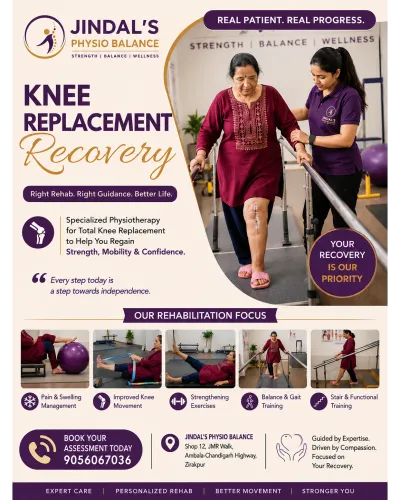
Knee pain after knee replacement
Knee replacement surgery is only one stage of recovery.
After surgery, rehabilitation commonly focuses on restoring:
- Knee movement
- Muscle strength
- Walking ability
- Balance
- Functional independence
- Confidence with daily activities
The rehabilitation plan should be progressed according to the individual's surgical status, medical condition and functional recovery.
Knee pain after an ACL injury
ACL rehabilitation requires more than simply reducing pain.
Depending on the stage of rehabilitation, treatment may focus on restoring range of motion, reducing swelling, rebuilding strength, improving neuromuscular control and gradually returning to functional or sporting activities.
Following surgery, rehabilitation should be appropriately staged and coordinated with the treating medical team.
Can knee pain be treated without surgery?
The answer depends on the underlying condition.
Many knee problems can be managed conservatively with appropriate rehabilitation, activity modification and other interventions when clinically suitable.
However, some injuries or conditions may require further medical investigation or surgical consultation.
A physiotherapist should not replace appropriate medical evaluation when there are signs that require referral.
When should knee pain be medically evaluated?
Seek appropriate medical assessment when knee pain follows significant trauma, when there is substantial swelling or instability, when you cannot bear weight, when symptoms are severe or worsening, or when there are other concerning symptoms.
A physiotherapist can also identify situations where referral or further investigation may be appropriate.
Why is individual assessment important?
Two people can both say:
“My knee hurts.”
But the reasons behind their symptoms may be completely different.
One person may have osteoarthritis.
Another may have weakness after surgery.
Another may have a sports injury.
Another may have difficulty controlling the lower limb during movement.
Therefore, effective physiotherapy should be based on clinical assessment, individual goals and progressive rehabilitation rather than a generic list of exercises.
Looking for knee pain physiotherapy in Zirakpur?
If knee pain is affecting your walking, stairs, exercise, work or daily activities, getting an appropriate assessment can be a useful first step.
At Jindal’s Physio Balance, Zirakpur, physiotherapy and rehabilitation are tailored according to the individual's condition and functional goals.
Our rehabilitation approach may include assessment, therapeutic exercise, strengthening, mobility work, balance training, functional rehabilitation and other clinically appropriate techniques.
Jindal’s Physio Balance
Family Physiotherapy & Rehabilitation Centre
Zirakpur, Punjab
If your knee pain is limiting your daily activities, contact us to discuss whether a physiotherapy assessment may be appropriate for you.
Frequently Asked Questions
Is physiotherapy good for knee pain?
Physiotherapy can be useful for many knee conditions. Treatment depends on the underlying cause and may include exercise therapy, strengthening, mobility work, balance training and functional rehabilitation.
How long does knee physiotherapy take?
Recovery time varies considerably depending on the diagnosis, severity, duration of symptoms, previous injuries, surgery and individual response to rehabilitation.
Should I exercise when my knee hurts?
Not every exercise is appropriate for every type of knee pain. Instead of completely avoiding activity or following random exercises online, it is better to understand what is contributing to your symptoms and choose an appropriate progression.
Can physiotherapy help knee osteoarthritis?
Physiotherapy can be an important component of conservative management for knee osteoarthritis, particularly through individualized exercise, strengthening and functional rehabilitation.
Do I need physiotherapy after knee replacement?
Rehabilitation is commonly an important part of recovery following knee replacement. The program focuses on restoring movement, strength, walking and functional independence according to the individual's recovery stage.
Where can I get physiotherapy for knee pain in Zirakpur?
Jindal’s Physio Balance provides physiotherapy and rehabilitation services in Zirakpur, Punjab, including rehabilitation for several knee-related conditions.
Medical note: This article is for general educational purposes and does not replace an individual clinical assessment or medical diagnosis. Persistent, severe or concerning symptoms should be evaluated by an appropriate healthcare professional.
Keywords